



The ReFlow® Mini Flusher
The only noninvasive device designed to restore, increase, or maintain cerebrospinal fluid flow within a shunt system, post-operative.
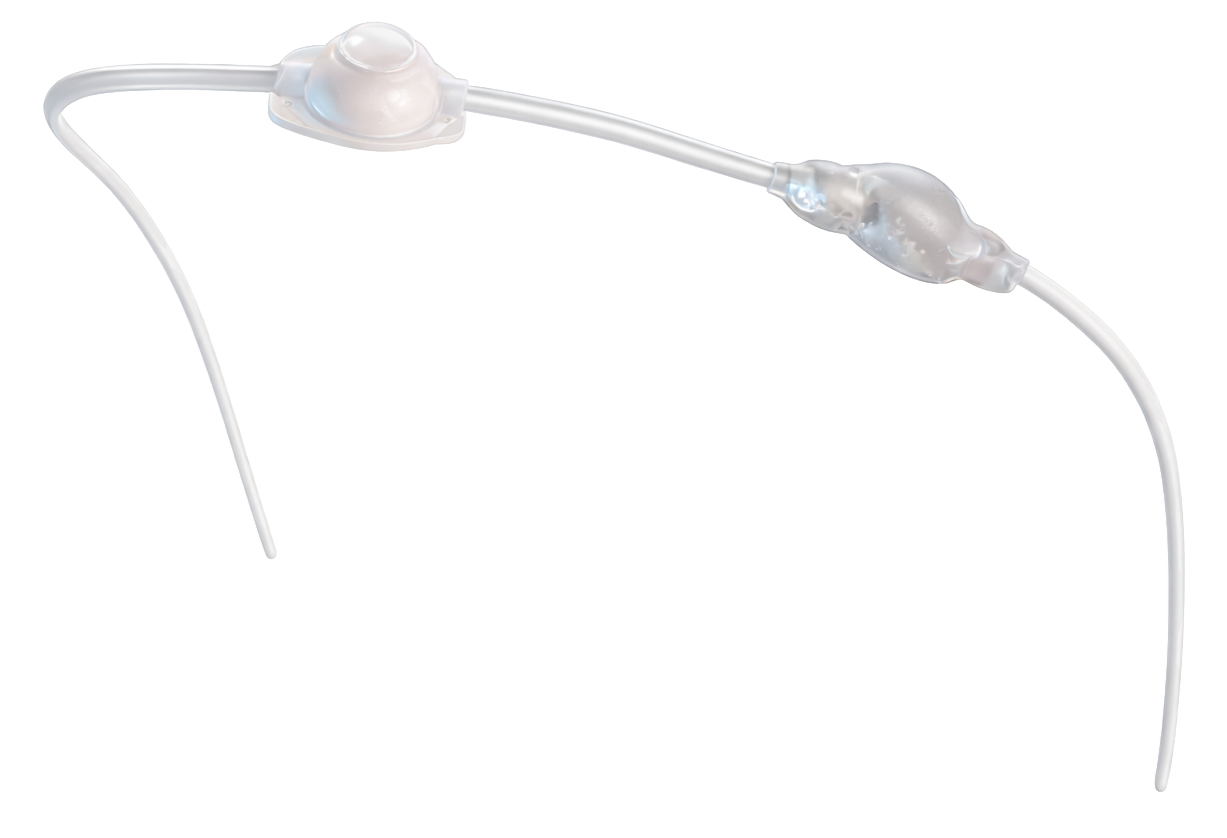

Proximal catheter failure is the most common complication in hydrocephalus shunt treatment⁴

Hydrocephalus affects over 30 million people worldwide.¹
The standard treatment, a surgically implanted shunt, drains excess cerebrospinal fluid from the brain to relieve pressure.
But shunts are fragile. Up to 50% of shunts in the pediatric population fail within the first year⁵, primarily due to occlusion, blockages caused by tissue, blood or debris clogging the ventricular catheter's flow holes.
When a shunt fails, it requires revision surgery. Each revision costs upwards of $40,000 and carries its own risks. Some patients endure dozens of surgeries across their lifetime.
Until now, there has been no device to maintain catheter flow without going back into the operating room.
1 Stony Brook Medicine. New Research Reconsiders the Cause of Hydrocephalus. news.stonybrookmedicine.edu/news/new-research-reconsiders-the-cause-of-hydrocephalus
2 Hydrocephalus Association. Complications of Shunt Systems. hydroassoc.org/complications-of-shunt-systems/
3 Cureus. 2024 Jun 13;16(6):e62334. doi:10.7759/cureus.62334
4 J Neurosurg Pediatr. 2024 Apr 12;34(1):84–93. doi:10.3171/2024.2.PEDS23356
5 Azzam et al. 2021;12:419.
How ReFlow Works

Attached to the shunt system.
The ReFlow® Mini Flusher is placed in-line between the ventricular catheter and the shunt valve during a standard implant or revision procedure. It does not significantly alter the surgical technique or add meaningful time.
Passive to normal flow.
When ReFlow is not pressed, the device is completely passive with bidirectional flow possible. CSF flows freely through the flusher to be regulated by the shunt valve.
A controlled flush on demand.
A deliberate press of the flusher dome sends less than half a milliliter of fluid toward the ventricular catheter, clearing inlet flow holes and restoring CSF flow. No surgery. No hospital visit.
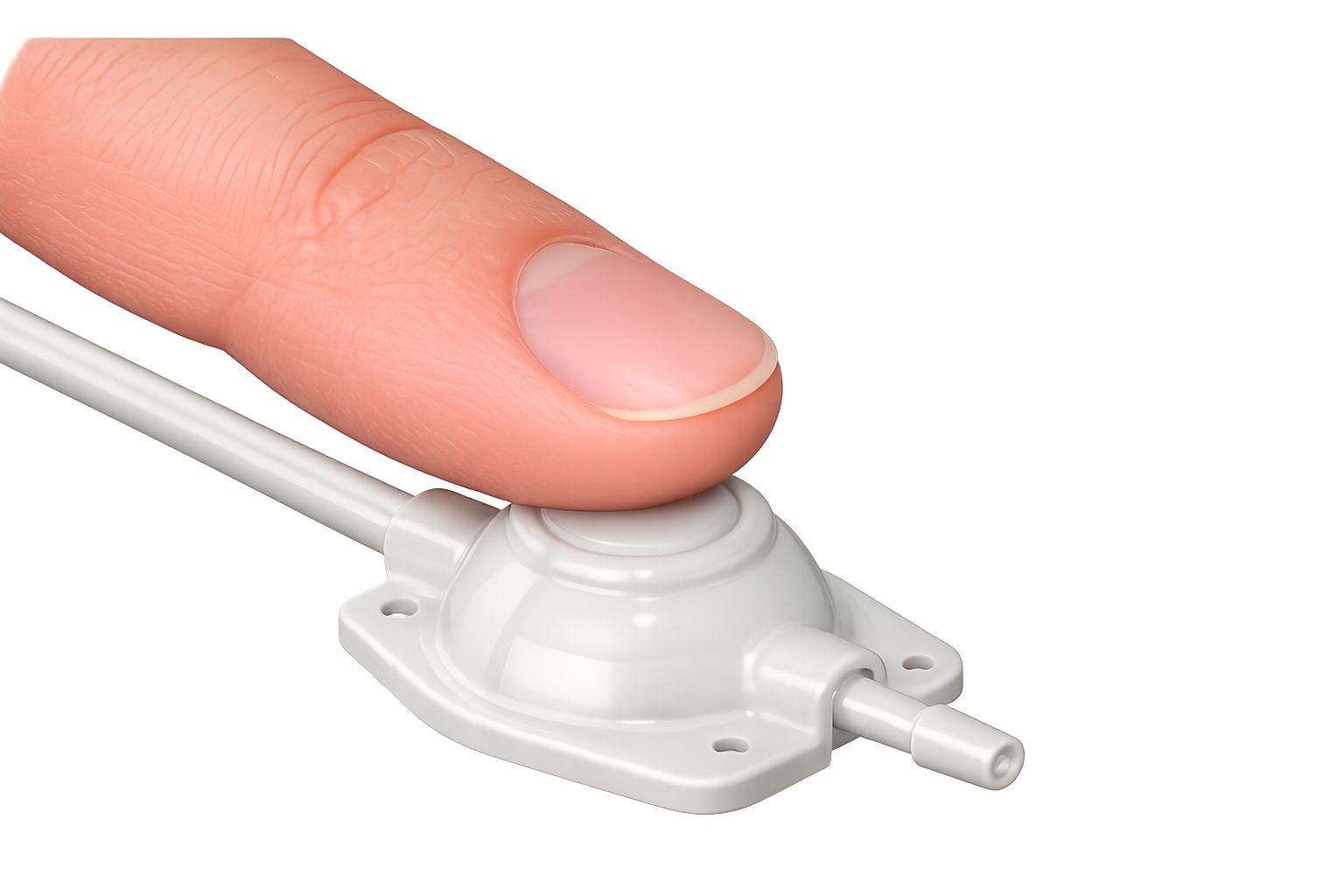

Engineered to work with the shunt system you already trust
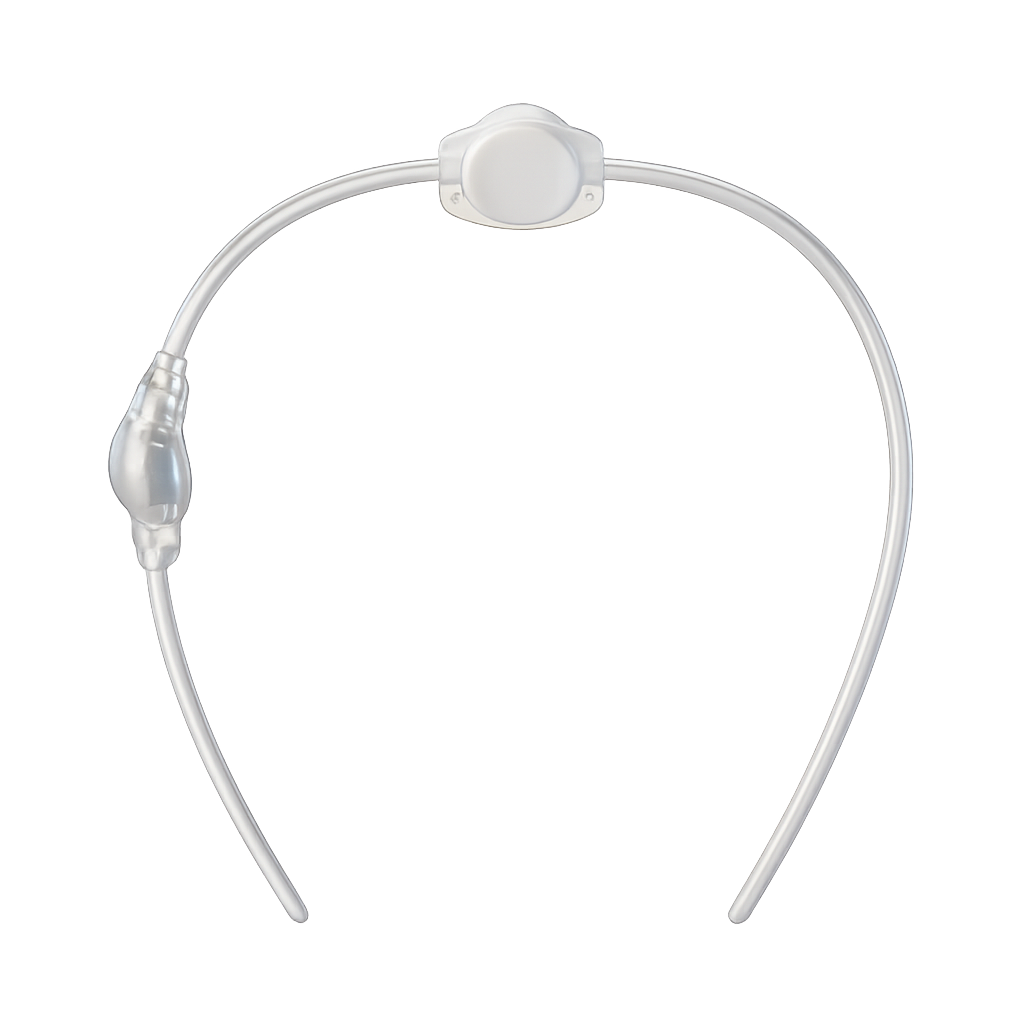
The ReFlow® Mini Flusher works with shunt valves, ventricular catheters, and distal catheters of most makes and models. It connects directly to the shunt ventricular catheter on one side and a pressure-controlled valve on the other.
All components are implanted under the scalp. The device is designed to support a broad patient population, from infants to older adults.


Two breakthroughs.
One technology.
ReFlow® is the only noninvasive flushing technology to earn FDA Breakthrough Device Designation twice, across both the Mini Flusher and the EVD Flusher.





Real-world use cases, visualized.

Middle-Aged Male Adult (Gen 2)
Idiopathic Intracranial Hypertension (IIH)
- Persistent headache at 4 & 10-week follow-up
- Ultrasound performed during ReFlow flush
- Septal bowing to the contralateral side & tissue deformation observed during flush
- Proximal catheter patency confirmed
- Flushing well-tolerated, no complications
Lee R, Meggyesy M, Ahn J, Theodore J, Biswas D, Luciano M. Trans-burr hole ultrasound to confirm ReFlow System Mini function and proximal catheter patency in a hydrocephalus patient with a ventricular shunt [abstract]. ISHCSF Meeting; 13–16 September 2024, Nagoya, Japan.

5-Year-Old Male (Gen 1)
Hydrocephalus from post-AVM rupture hemorrhage
- At shunt placement completion with ReFlow in-line, the shunt reservoir was noted not to refill
- Following non-invasive manual depression of ReFlow, intraoperative ultrasound demonstrated debris clearing from the obstructed ventricular catheter
- CSF flow returned, followed by brisk refill of shunt valve
Porter Z, Yang G, Vuong S, Hanna B, Madsen J, Vadivelu S. In situ clearance of a proximal shunt malfunction in a child with hydrocephalus post cerebral arteriovenous malformation rupture noted intraoperatively. Surg Neurol Int. 2020 May 16;11:116. doi:10.25259/SNI_156_2020.