










Anuncia
Anuncia
Abstract background with flowing curved light streaks in purple and soft pink hues on a white backdrop.

Innovative Technology
Designed to Address
Proximal Shunt Occlusion

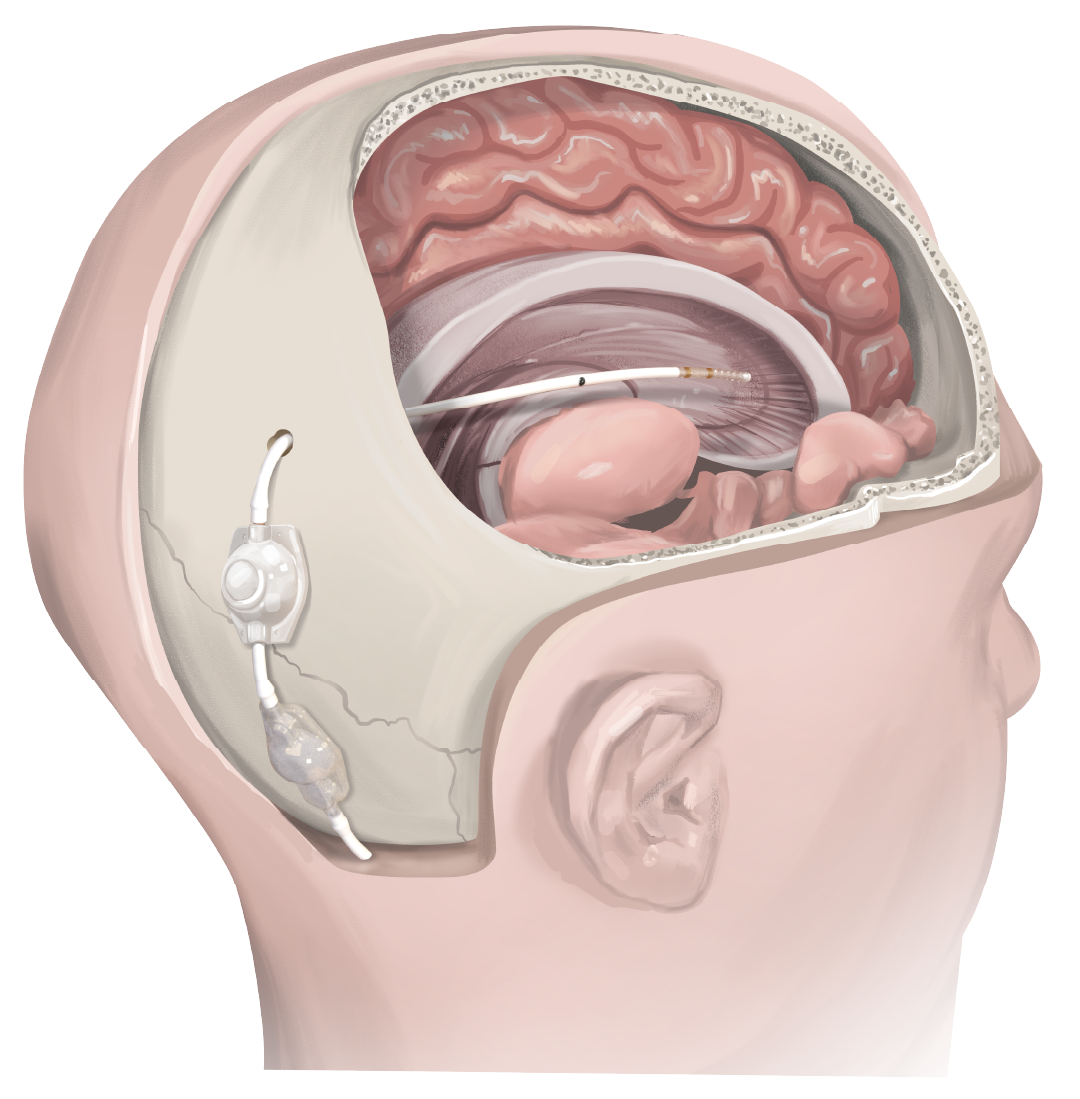
Cross-section of head showing brain and implanted medical device with electrode inside the brain.
Innovative
Transformative
Compatible
Guardians of the Headwaters.
Smiling mother and father in black with daughter in white floral dress sitting in front of them.
Transforming CSF Management.
Man and woman high-fiving outdoors with three children around them at sunset in an orchard.
Guarding Life At The Source.
Smiling man, woman, and baby posed closely together on a black background.
Transforming CSF Management.
Smiling family of six posing together against a light gray backdrop.
Guarding Life At The Source.
Smiling parents lifting their young son by his hands outdoors on a bright day.
Transforming CSF Management.
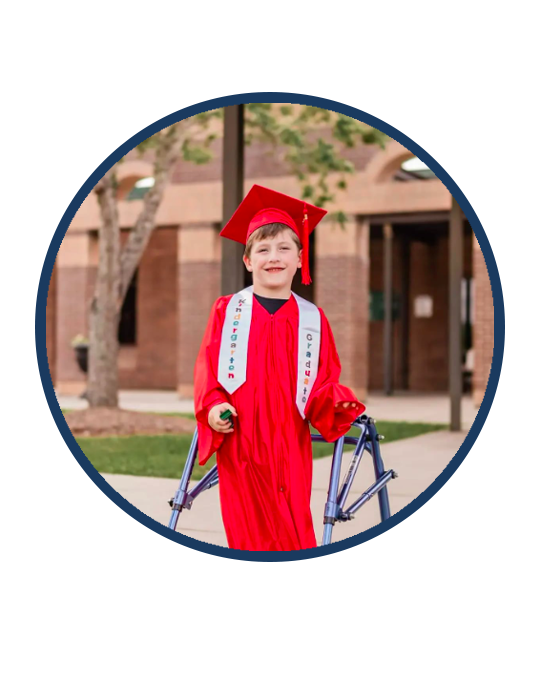
Young boy in a red graduation gown and cap using a walker outside a building.
Guarding Life At The Source.
Smiling family of six posing together against a light gray backdrop.
Transforming CSF Management.
Smiling mother and father in black with daughter in white floral dress sitting in front of them.

Shunt Failure Remains
a Clinical Reality.

Ventricular catheter occlusion — blockage of the catheter's flow holes — continues to be the leading cause of shunt malfunction.¹ Revision surgeries increase risk, burden families, and impact clinical workflow.

Addressing proximal obstruction post-operatively, noninvasively at home represents a meaningful advancement in hydrocephalus management.

Up to 50%
of all shunts fail within 2 years of placement.²
$35,816
is the average cost of a shunt-related hospital admission.³
Up to 85%
of patients require revision within 15 years of placement.⁴
$2,000,000,000
per year hospital charges for hydrocephalus in the US.⁵
Over 50%
of shunt failures are proximal occlusion in peds.⁶

1 Ferguson et al. Neurosurg Focus 22(4):E7, 2007.

2 Hydrocephalus Association. Complications of Shunt Systems. hydroassoc.org/complications-of-shunt-systems/

3 Patwardhan RV, Nanda A. Neurosurgery. 2005;1:139–144.

4 Stone JJ, et al. J Neurosurg Pediatr. 11 (2013) 15–19.

5 Koschnitzky et al. J Neurosurg. 139:502–511, 2023.

6 Hanak et al. Pediatr Neurosurg. 52(6):381–400, 2017.

Engineered to Work With all Shunt Systems.

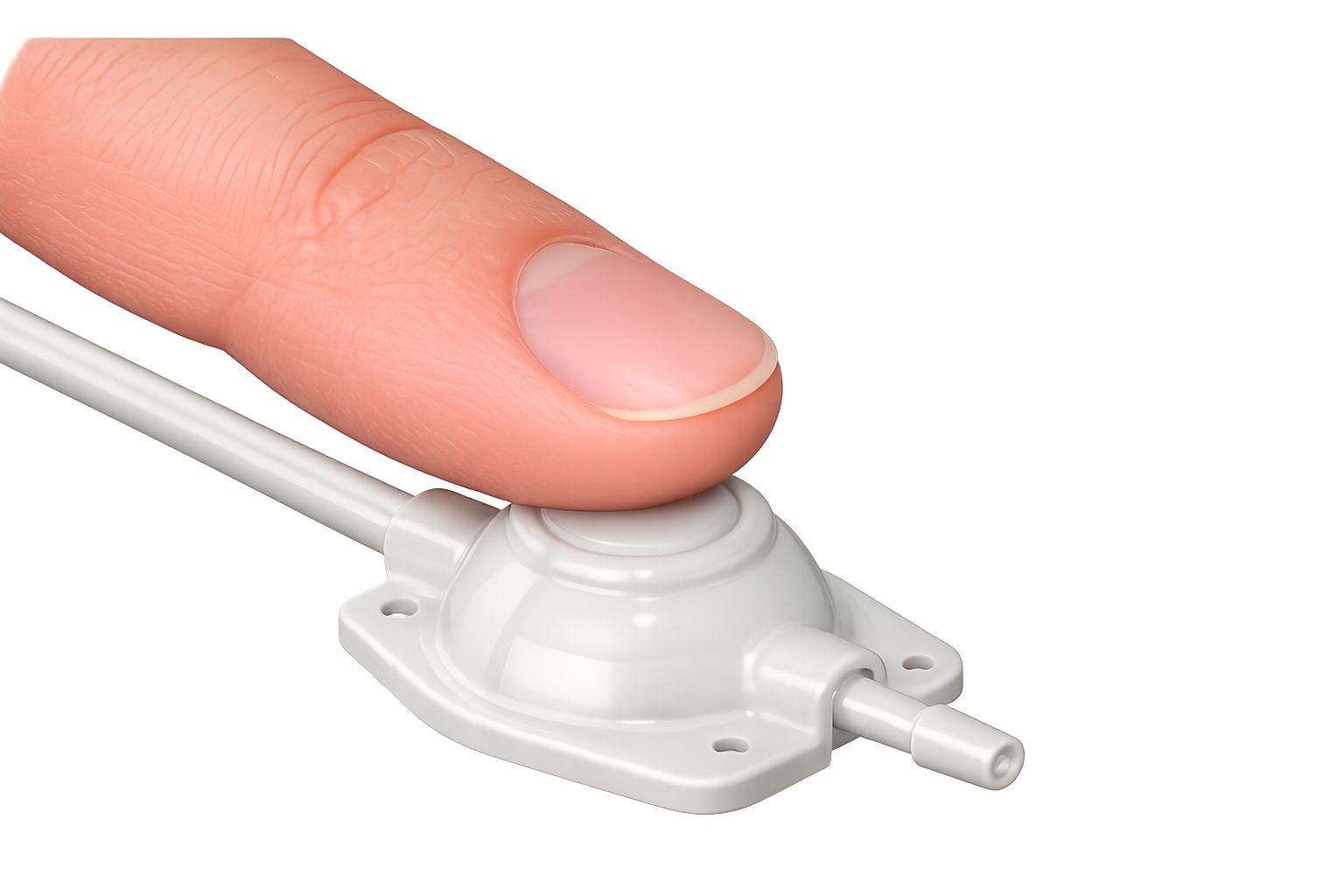
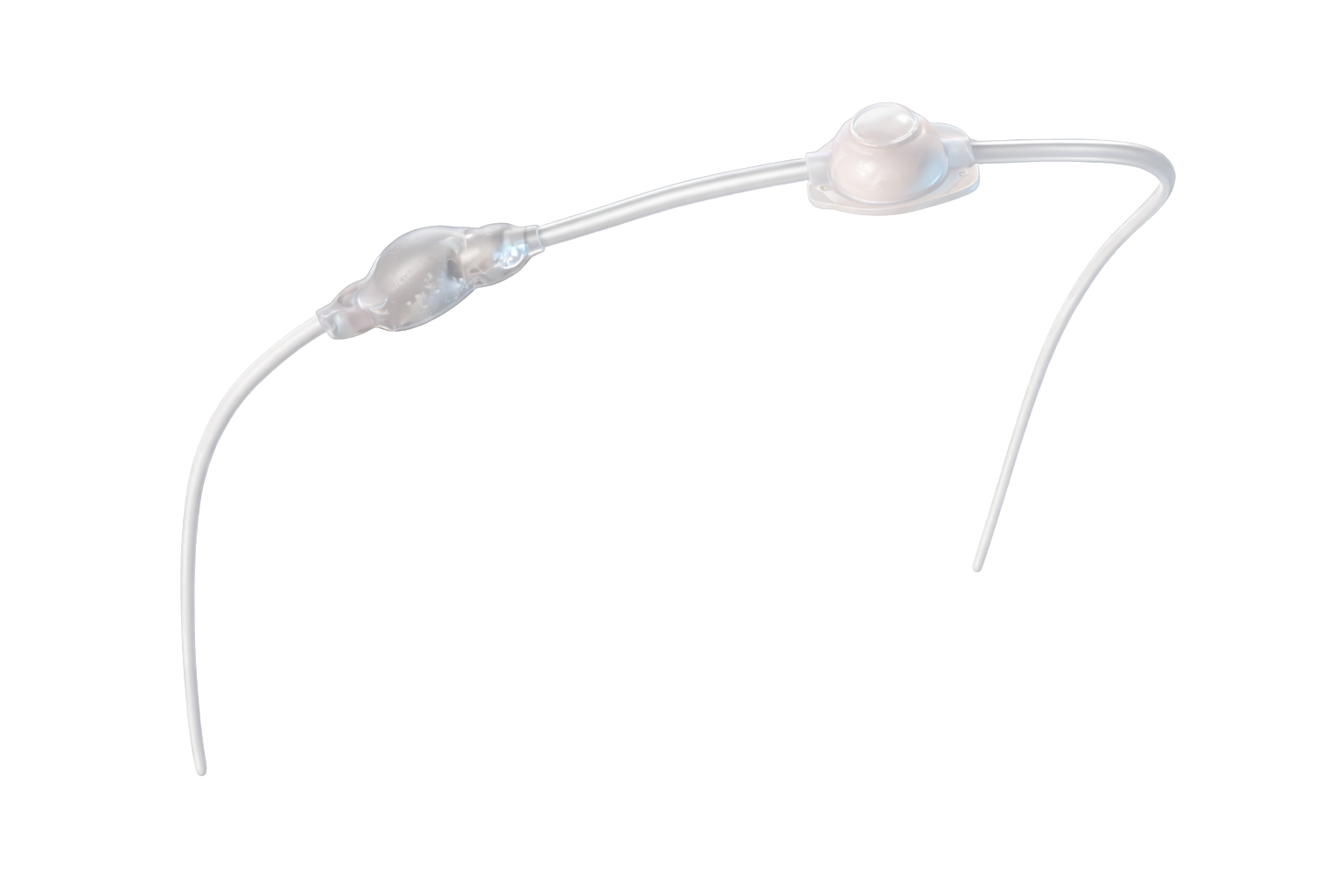
The ReFlow® Mini Flusher integrates into existing shunt systems. When pressed, it occludes distal flow and delivers a controlled flush toward the ventricular catheter to help address proximal obstruction.

14 → 1

proximal failure reduction in early study before and after revision including ReFlow

9

Patients in early study showing proximal shunt failure reduction1

simple bg
4+ Years

of clinical follow-up data

hospital icon
happy icon
leaf icon
The ReFlow design provides a noninvasive method to attempt restoration, increase or maintenance of CSF flow in the ventricular catheter.

FDA Cleared

Commercially available in US

180+ patients implanted
heart icon

1 Vinzani et al. Pediatr Neurosurg. 2023;58:136–141.

For Patients - elderly woman with child

For Patients

For Clinicians - medical professional

For Clinicians

Flow background
ReFlow Mini Flusher device

Real Experiences.
Real Care.

Young boy in a red graduation gown and cap using a walker outside a building.
Smiling family of six posing together against a light gray backdrop.
See More
patient stories

7-year-old Boy Managing His Hydrocephalus with ReFlow® Ventricular System

With his hydrocephalus being managed and the ReFlow® device, Sutton's parents feel a sense of comfort. For his mom, Miranda, that means knowing that there is a routine that requires 20 seconds to flush Sutton's device, allowing her to focus on his social, emotional and other important aspects of life, like school, faith, and fun.

10-year-old Boy with Hydrocephalus Travels the Globe with ReFlow® Ventricular System

Since having the ReFlow® device implanted, Zachary's family has embraced life with new confidence. With a simple 30-second flush as part of his bedtime routine, his parents can help manage his hydrocephalus at home. Zachary and his dad even traveled to Egypt — an adventure that would never have been possible before ReFlow®.

Pediatric Neurosurgeon on the Impact of ReFlow® in Reducing Shunt Revisions

In a published study, patients went from 14 shunt revisions in the two years before ReFlow® to just 1 revision in the years following implantation. Dr. Ramin Eskandari, pediatric neurosurgeon at the Medical University of South Carolina, noted that "surgeons have never before been able to non-invasively address an occluded catheter."


Flow background

Real Experiences. Real Care.

person
58

Sophia m.

Patient

As a first-time patient, I was impressed with how friendly and attentive the staff were. My dermatology treatment went perfectly.

Ophthalmology
Feb 3
person
38

Emily Davis

Patient

The pediatrics department made my child feel completely at ease. Their gentle approach and expert care were beyond my expectations.

Pediatrics
March 28
person
29

James Miller

Patient

The cardiology team was incredibly supportive and explained everything clearly. I felt safe and cared for throughout my treatment.

Cardiology
Jan 23
person
33

Olivia Martinez

Patient

The gynecology service was exceptional. I appreciated the clear communication, respect at every step of the process.

Gynecology
April 15

7-year-old Boy Managing His Hydrocephalus with ReFlow® Ventricular System

With his hydrocephalus being managed and the ReFlow® device, Sutton's parents feel a sense of comfort. For his mom, Miranda, that means knowing that there is a routine that requires 20 seconds to flush Sutton's device, allowing her to focus on his social, emotional and other important aspects of life, like school, faith, and fun.

Miranda, Sutton's Mother

Hydrocephalus Patient Family